

Farage Criticised Over Controversial Deportation Plans
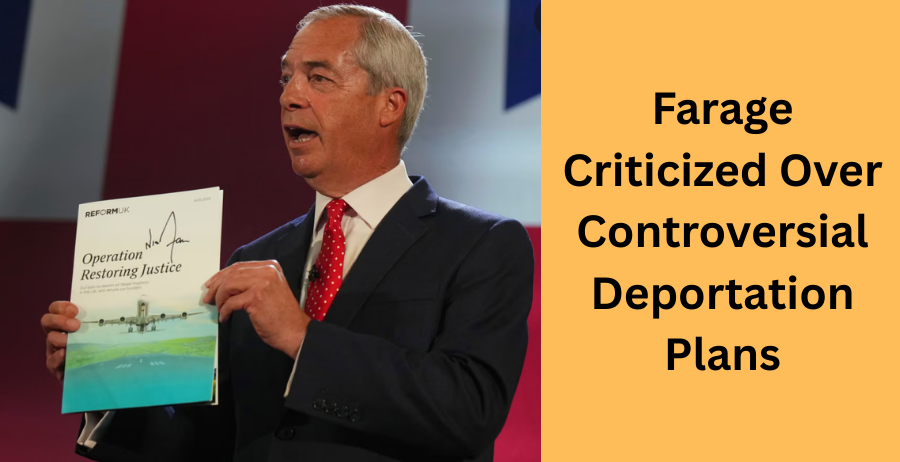
Nigel Farage has come under sharp criticism for unveiling a controversial plan to deport large numbers of asylum seekers, including women and children, under what he calls “Operation Restoring Justice.” Speaking at a press event in Oxford, the Reform UK leader said he would push to withdraw Britain from international human rights commitments in order to remove “absolutely anyone” arriving by small boats.
Farage claimed that his proposal, which includes negotiating deals with authoritarian governments such as the Taliban to accept deportees, would halt Channel crossings “within days” and save the country “tens of billions of pounds.” He also described asylum seekers as a threat to national security and to women in the UK.
Downing Street dismissed his ideas as unrealistic, but notably stopped short of condemning his use of terms such as “invasion” and “scourge” to describe irregular migration. When asked specifically about his suggestion of making agreements with Taliban-controlled Afghanistan, a government spokesperson said nothing was “off the table.”
Criticism, however, came swiftly from across the political spectrum. The Liberal Democrat leader, Ed Davey, accused Farage of “tearing up Britain’s proud human rights legacy” for political gain, warning that such rhetoric was “ugly, powerful, and destructive.” Legal experts and human rights groups expressed alarm, arguing that abandoning agreements like the European Convention on Human Rights, the Human Rights Act, and the Refugee Convention would dismantle long-standing legal protections established since the Second World War.
Laura Smith of the Joint Council for the Welfare of Immigrants said the proposals represented a dangerous break with centuries of British legal tradition. She stressed that fundamental rights such as the ban on torture cannot be negotiated away. George Peretz KC of the Society of Labour Lawyers called the proposals unworkable, stressing that the UK has no return agreements with Iran, Sudan, Eritrea, or Afghanistan—countries already ruled unsafe by British courts.
Farage claimed the policy could see up to 600,000 asylum seekers deported during a single parliament, but provided no clear explanation of how it would be implemented or funded. Estimates from the Centre for Migration Control suggest a mass deportation programme could cost as much as £47.5bn. Farage insisted his version would cost closer to £10bn, though he offered no independent evidence or detailed financial plan to back the figure.
Human rights organisations such as Freedom from Torture warned that abandoning postwar protections would embolden repressive regimes worldwide and undermine Britain’s global reputation. “These laws exist to protect us all,” said Kolbassia Haoussou, one of the group’s directors. “Scrapping them would be a gift to dictators and a betrayal of the promise that everyone deserves the right to live free from torture.
— Reporting by Naqsh News and other Agencies
Related Posts:
Azerbaijan Armenia Peace Deal Signed at White House, Launching ‘Trump Route’ for Regional Prosperity
Saudi Arabia and Syria Strengthen Economic Ties with New Investment Agreement


